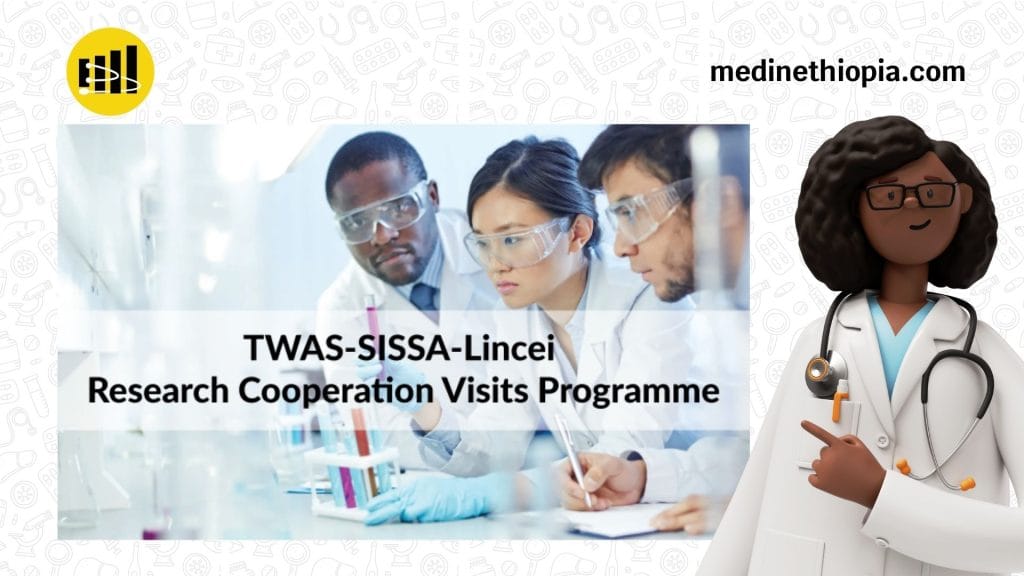
The World Academy of Sciences (TWAS), in partnership with the International School for Advanced Studies (SISSA) and the Accademia Nazionale dei Lincei, invites applications for the TWAS-SISSA-Lincei Research Cooperation Visits Programme. This South-North-South circular programme funds three-month research visits at Centres of Excellence in Trieste and Udine, Italy, for early-career scientists from United Nations-listed Least Developed Countries (LDCs). The visits are intended to strengthen research capacity, support collaborative projects relevant to the Sustainable Development Goals (SDGs), and catalyse lasting institutional links.
What is the TWAS-SISSA-Lincei Research Cooperation Visits Programme?
- A competitive, merit-based fellowship enabling young scientists from LDCs to spend three months at a host laboratory in the Friuli Venezia Giulia region (Trieste / Udine).
- Aimed at researchers at the beginning of their career who hold at least an MSc and occupy a research position in an LDC.
- Research proposals must fall under the umbrella of sustainability science and demonstrate relevance to one or more SDGs.
- Funded by the Italian Ministry of Foreign Affairs and International Cooperation and the Italian Agency for Development Cooperation, administered by UNESCO-TWAS.
What does the programme offer?
- Travel and subsistence costs covered for the visit.
- Access to host facilities: specialised laboratories, equipment (NGS, structural biology/synchrotron beamlines, advanced microscopy, HPC and data-science resources), and technical support as agreed with the host.
- Mentorship: supervision by established host scientists and integration into active research groups.
- Networking: opportunities to form collaborations with Italian and international researchers and to participate in seminars and research activities at host institutions.
- Capacity building: transfer of methods and training that can be implemented at the applicant’s home institution after the visit.
Who is eligible?
- Nationals of UN-listed Least Developed Countries (LDCs).
- Holders of an MSc or higher degree.
- Maximum age: 40 years on 31 December of the application year.
- Employed in a research position in an LDC.
- Applicants already on site in the host country are not eligible.
- Women scientists are especially encouraged to apply.
Eligible health-related fields (for health professionals)
Applicants working in health, biomedicine and related disciplines should select a field that matches the host laboratory. The following health-relevant fields are eligible under the programme; match your proposal to the specific host and tick the single field on the form that best fits your project.
ICGEB (Trieste)
- Non-communicable diseases: molecular oncology, cardiovascular research, neurodegeneration, genetic disease
- Human viral diseases and pathogen biology (dengue, chikungunya, Zika, COVID-19 and similar)
- Biotherapeutics and biosimilars; vaccine and diagnostic development
- Computational biology applied to host–pathogen interactions
University of Trieste (biomedicine)
- Molecular oncology and molecular microbiology
- Immunology and molecular pathology
- Pharmacology and chemotherapy; drug design and formulation
- Nutritional biochemistry; biotechnology
- Neurosciences; molecular genetics; biomaterials and tissue engineering
Elettra Sincrotrone Trieste / structural facilities
- Structural biology and macromolecular crystallography for drug-target characterisation
- Synchrotron-based methods (X-ray absorption, tomography) for biomolecular and drug studies
IOM-CNR (Materials Foundry)
- BioMed: biophysics, nanomedicine, soft matter approaches relevant to therapy and diagnostics
Area Science Park
- Genomics and epigenomics (NGS-based pathogen surveillance)
- Environmental microbiome research linked to public health
- Machine learning / high-performance computing applications for life sciences and large-scale biological data
SISSA (interdisciplinary / data science / neuroscience)
- Physics and chemistry of biological systems; computational modelling applied to biomedical questions
- Data science and numerical methods for life-science research; neuroscience modelling
Cross-cutting / translational areas (applicable across hosts)
- Molecular diagnostics and assay validation
- Genomics, bioinformatics and pathogen surveillance
- Applied epidemiology and laboratory methods for infectious disease control
- Method development and protocol transfer to strengthen home-country laboratory capacity
Selection criteria
- Scientific excellence and originality of the proposed research.
- Feasibility and appropriateness of a three-month research plan.
- Clear link between the project and the host laboratory’s expertise and facilities.
- Potential for capacity building and sustained collaboration with the applicant’s home institution.
- Relevance to the Sustainable Development Goals (SDGs).
- Academic track record and the strength of referees’ recommendations.
Application and required documents
Applicants must submit a complete application in English by the deadline.
- Fellowships are awarded by the Selection Committee on the basis of scientific merit.
- Applications should be completed in English.
- Applicants need to submit the complete application form duly signed and send it to the TWAS Secretariat. Applications may be sent by email as long as pages with signatures are sent as scanned documents. Incomplete/unsigned applications will NOT be accepted.
- Required materials include:
- Completed and signed application form.
-
- Copy of passport.
- Curriculum vitae, including a statement of research interests and future plans tied to sustainable development in the home country.
- Full list of publications (do not enclose reprints).
- Copy of MSc (or higher) certificate.
- Invitation letter from the chosen host laboratory confirming the proposed 3-month period, agreed research plan and available facilities (this letter is essential).
- Two signed letters of recommendation sent directly by referees to exchanges@twas.org (signed PDF attachments or sealed physical letters).
Important: Incomplete or unsigned applications will not be accepted.
Timescale and recommendations for applicants
It is strongly recommended that you start the process well in advance as the following stages are required:
- study the host institution website to consider research areas and possible host supervisor;
- get in touch with potential host supervisor to introduce yourself and discuss research plan for a possible visit;
- should there be an agreement, obtain acceptance letter from potential host supervisor;
- fill in the form here below, include all required documentation and send your application by email to exchanges@twas.org
Other information
- Applicants must provide evidence that they will return to their home country upon completion of their Fellowship.
- Applications for part-time visits will be considered ineligible.
- Incomplete/unsigned applications will not be accepted. Applications may be sent by email as attachments as long as pages with signatures are sent as scanned documents.
- Successful applicants must not take up other assignments during the period of their TWAS-SISSA-Lincei Research Cooperation Visits Programme.
Deadline, timing and location
-
Application deadline: 15 October 2025.
-
Duration of visit: Three months (dates to be agreed with the host laboratory).
-
Location: Centres of Excellence in Trieste and Udine, Italy (examples of hosts: SISSA, ICGEB, University of Trieste, Elettra Sincrotrone, IOM-CNR, Area Science Park).
Looking for more scholarships, fellowships, internships, and professional development programmes?
Follow us on Telegram at @medinethiopiainsider
Subscribe to our website : medinethiopia.com
We publish verified opportunities every week tailored for health professionals across Ethiopia
-
Med In Ethiopiahttps://medinethiopia.com/author/fomclb/
-
Med In Ethiopiahttps://medinethiopia.com/author/fomclb/
-
Med In Ethiopiahttps://medinethiopia.com/author/fomclb/
-
Med In Ethiopiahttps://medinethiopia.com/author/fomclb/