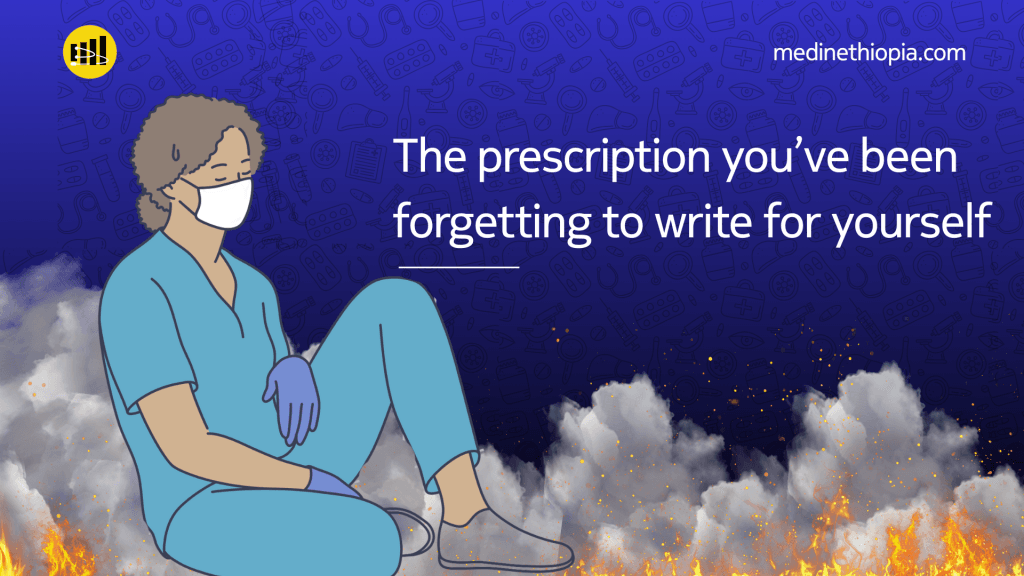
It’s late in the afternoon, and you’ve been seeing patients the whole day. On top of this, you have to study for an upcoming exam that’s in 3 days, but you don’t feel like doing anything and you are procrastinating. You’re not enjoying your downtime because you are worried you’re getting nothing done. This is the reality of burnout as a medical professional. Does this sound familiar?
What is burnout?
According to the World Health Organization (WHO) burnout is an occupational syndrome. It’s defined as “a syndrome conceptualized as resulting from chronic workplace stress that has not been successfully managed and it’s characterized by 3 dimensions:
- feelings of energy depletion or exhaustion
- Increased mental distance from job or feelings of negativism or cynicism related to one’s job, and
- Reduced professional efficacy
Burnout refers specifically to phenomena in the occupational context and should not be applied to describe experiences in other areas of life
How does it happen?
You just don’t wake up burned out one day; burnout happens over time when a person faces constant high demands that require excessive effort for insufficient reward. Other key causes are facing unfair treatment and having little to no autonomy in the workplace. Additionally, Denying oneself of the required downtime by constantly overworking oneself , neglecting ones mental health , sleep deprivation and a lack of self-care creates the perfect recipe for burnout .
How does burnout manifest?
Burnout can manifest in different ways. If you have these symptoms you might want to see them as a sign to stop neglecting your own mental health.
Common signs include:
- feeling exhausted all the time
- reduced work efficacy
- developing a negative or detached attitude towards your job, dreading tasks
- constant procrastination because tasks feel overwhelming
- behavioral changes like being irritated by minor things (being short tempered)
- increased reliance on escapism through food, substance, social media or gaming to cope with the stressful work environment.
- physical symptoms: sleep disturbance, headaches, change in appetite
What are the stages of burnout?
Stage 1. Honeymoon phase
This is the first stage where one feels highly productive, excited and optimistic to tackle new tasks.
Stage 2. Onset of stress
At this stage productivity and optimism start to decline. Physical signs like fatigue and sleep disturbance also start to appear.
Stage 3. Chronic stress
Frustration and cynicism occurs. Physical and emotional symptoms worsen
Stage 4. Burnout
As full-blown burnout sets in, individuals experience its three dimensions: they feel energy depletion, develop feelings of cynicism or negativism, and see a drop in their professional efficacy
Stage 5. Habitual burnout
People experiencing chronic burnout symptoms may eventually lose all ability to function and require external support.
What is the Impact on Your Patients?
The consequences of burnout extend far beyond the well-being of the medical professional; they directly impact the safety and quality of patient care.
-
Increased Medical Errors: Lapses in judgment, dosing errors, or missed diagnoses often stem from extreme exhaustion and reduced professional efficacy.
-
Diminished Quality of Care: When a provider feels a “mental distance” or cynicism toward their job, patients may receive less empathy and poorer communication.
-
Reduced Patient Satisfaction: Because patients quickly sense when a provider is detached or ‘short-tempered,’ these behaviors can easily break down the therapeutic relationship.
-
Safety Risks: High-stakes medical procedures are put at risk by sleep deprivation and fatigue, which significantly impair essential cognitive functions.
Solutions: How to Avoid Burnout
Prevention is about managing the balance between “high demands” and “sufficient rewards” before reaching the onset of stress.
- Establishing Boundaries: Learn to say no to extra shifts or tasks when you are reaching your limit to prevent overworking.
- Promoting Autonomy: Seek roles or environments where you have a say in your workflow, as a lack of autonomy is a primary driver of burnout.
- Prioritize Self-Care: You should make sleep, nutrition, and physical activity non-negotiable parts of your routine rather than “luxuries.”
- Support Systems: By fostering a workplace culture where colleagues discuss stress openly, you can reduce the isolation caused by unfair treatment or “yelling” in front of peers.
Recovery
If you find yourself in the “Burnout” or “Habitual Burnout” stages, recovery requires more than just a long weekend; it requires a systematic change.
- Acknowledge and Validate: The first step is recognizing the symptoms such as procrastination and dread as signs of a clinical syndrome rather than personal failure.
- Professional Support: In cases of habitual burnout, seek professional counseling or medical support to address the “complete loss of function”.
- Mandatory Downtime: Disconnect completely from work-related digital spaces (social media/emails) to allow the nervous system to reset.
- Re-evaluate your goals: Assess whether your current occupational context is sustainable and seek changes in your environment to ensure your effort meets with adequate reward.
Conclusion
Burnout is not a sign of weakness; it is a predictable response to chronic, unmanaged workplace stress. In the high-pressure world of medicine, it is easy to neglect your own mental health while tending to others, but you cannot pour from an empty cup. By recognizing the stages from the honeymoon phase to habitual burnout and implementing proactive solutions, medical professionals can protect their well-being, their passion for medicine, and, most importantly, the lives of their patients.
We publish verified opportunities every week tailored for health professionals across Ethiopia.
Follow us on Telegram: @medinethiopiainsider
Subscribe to our website : Subscribe

Dr. Hanna Zerihun is a general practitioner who graduated from Tikur Anbessa Specialized Hospital. She believes in the power of data-driven, evidence-based medical content to empower communities and is passionate about producing clear, accurate, and reliable medical information.

Dr. Kidstemariam Mesfin is a General Practitioner who graduated from Jimma University. At Med In Ethiopia, she contributes to the development of medical resources for both healthcare professionals and the general public, focusing on creating reliable, engaging content that simplifies complex healthcare topics and supports professional development across Ethiopia’s health community.
-
Dr. Kidstemariam Mesfinhttps://medinethiopia.com/author/kidst/